Books for HigherEd Professionals 2027
Looking for your next read? This year's list is about change, which for anyone working in education is hardly a niche topic.
Change sits at the heart of our work, and especially of the work done in the third space between academic and professional roles: educational and academic developers, instructional designers, educational technologists. We sometimes decide on a change ourselves, yet not always. We help lecturers, teams and programmes find their way through one, usually without formal authority, and since the arrival of generative AI that has become the daily job. The books below follow that work from several sides: how change unfolds, how people make sense of it, why it can feel like loss, what earlier technologies promised, and what all this effort is ultimately for. As always, the list ends with something completely different.
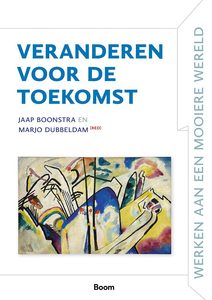
1. Veranderen voor de toekomst: werken aan een mooiere wereld
By Jaap Boonstra & Marjo Dubbeldam (eds.)
Working towards a more beautiful world – Available in English: Organisational Change for the Future: Exploring Theories and Practices for a Transforming World (Edward Elgar, 2026)
If there’s one book on change to read this year, it’s this one. Boonstra and Dubbeldam put three questions to thirty changemakers: can we change the future, what role can we play in vital organisations and a fair, sustainable world, and what will change work look like as a profession forty years from now? The result is a broad and at times philosophical collection of analyses, personal stories and cases, spread over eight parts and 464 pages. It shifts the focus from change inside one organisation to problems that cross organisational boundaries, takes perspectives from ecology and art seriously, and much much more. It’s a book to dip into now and then. For educational developers it is interesting because it treats change as the work of professionals who connect people and perspectives, much like the hubs I described in Neither Top-Down nor Bottom-Up. It touches many aspects and change topics in depth from multiple perspectives and experiences.

2. Sensemaking in Organizations
By Karl E. Weick
Karl Weick’s classic is about how people work out what is going on when things stop making sense, and how that ongoing interpretation shapes what organisations become. It is a theoretical book, written for advanced students of organisation and dense with references, built around seven properties of sensemaking that range from identity to plausibility. It is not a management guide: practical advice is limited to a few maxims at the end, and Weick is openly wary of recipes. What makes it interesting for educational developers is the lens it offers. Change looks less like implementing a decision and more like people comparing notes and building a shared story about what that change means.
3. The Practice of Adaptive Leadership: Tools and Tactics for Changing Your Organization and the World
By Ronald Heifetz, Alexander Grashow & Marty Linsky
An eye-opener for anyone trying to talk about generative AI in higher education. This is the hands-on companion to Heifetz’s earlier work on adaptive leadership: less a theory book than a handbook, full of diagnostic questions, stories, diagrams and exercises. Its core distinction is between technical problems, which can be solved with existing expertise, and adaptive challenges, which ask people to change their habits, priorities and sometimes their professional identity. That distinction helps explain why a licence or an AI policy settles so little, and why colleagues react to AI the way they do: what people resist is often loss rather than change, which I explored in a note on AI and the grief of professional identity, and clashing ideas and values are part of it all. The book is written for leaders in any sector, but it treats leadership as an activity rather than a position, so most of it applies to anyone who has to lead without formal authority.
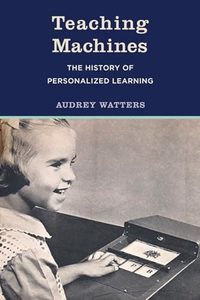
4. Teaching Machines: The History of Personalized Learning
By Audrey Watters
Audrey Watters wrote a history of the teaching machines of the twentieth century, from Sidney Pressey’s mechanised test-giver in the 1920s to B.F. Skinner’s devices in the 1950s, and of the psychologists, inventors and companies behind them. It is well researched and very readable, a work of history rather than a polemic, although Watters doesn’t hide her views. Its interest today lies in how familiar the promises sound: every student learning at their own pace, instant feedback, teachers freed from routine work. Watters shows how much of that vision came from behaviourist psychology and commercial ambition. That makes it good background for anyone asked to evaluate an AI tutor, and a companion to the question I asked in The Personalisation Paradox: personalised towards what end?
5. Centers for Teaching and Learning: The New Landscape in Higher Education
By Mary C. Wright
Mary C. Wright gives a broad picture of Centres for Teaching and Learning in the United States. Based on an analysis of more than 1,200 CTL websites and interviews with centre leaders and staff, the book covers their goals and theories of change, programmes, organisational structures, evaluation practices and growing mandates, from online learning to community engagement. It is an empirical study rather than a how-to guide, with advice on strategic leadership along the way. The American context differs from ours in Flanders and the Netherlands, where the same kind of team goes by many names and sits centrally, decentrally or somewhere in between. Still, the book offers a useful vocabulary and a set of questions for thinking about your own centre: what it is for, whom it serves and how it knows it makes a difference. Those questions also run through a small booklet on CTLs on this site. A follow-up, Educational Development in an Age of Change by Wright, Addy, Eynon and colleagues, is due from Johns Hopkins University Press in December 2026.
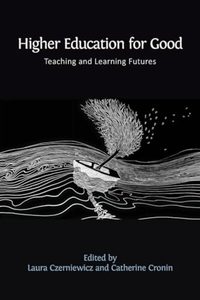
6. Higher Education for Good: Teaching and Learning Futures
By Laura Czerniewicz & Catherine Cronin (eds.)
An open access collection edited by Laura Czerniewicz and Catherine Cronin, with contributions from academics and professionals in 17 countries and many disciplines. Together they ask what higher education is for, beyond the financial incentives and performance indicators that dominate the way universities are run and described today. The contributions vary in form and perspective, and the book treats the challenges facing universities as wicked problems that call for many experiments and imaginaries rather than one solution. It is a hopeful book that takes the crises of recent years seriously, and a good counterweight to last year’s Dark Academia. It is free to read from Open Book Publishers.
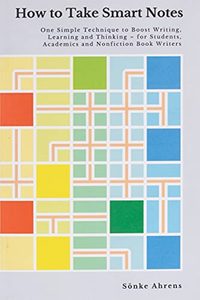
7. How to Take Smart Notes
By Sönke Ahrens
A short, practical book about writing and thinking with notes, based on the Zettelkasten method of sociologist Niklas Luhmann. Ahrens explains both how the method works and why it works, drawing on insights from the psychology of learning, and he keeps it independent of any tool: paper and software both do the job. It is aimed at students, academics and nonfiction writers, and is useful for anyone in higher education who reads a lot and writes reports, papers or policy notes. A website organised into seedlings, growing notes and evergreen notes was always going to recommend this one. It is this work that inspired me to start collecting and writing in the first place. Take a look at Obsidian if you are interested in a tool that can help you write these kind of notes.
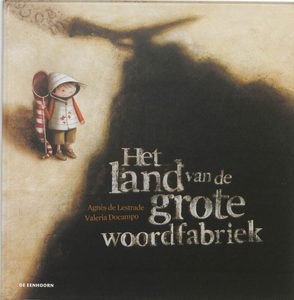
8. Het land van de grote woordfabriek
By Agnès de Lestrade, with illustrations by Valeria Docampo
And now for something completely different: a picture book, and a beautiful one. I have read this book to children and no-longer children of all ages, during quiet evening hours at camps as a youth leader and as a sports coach . In the land of the great word factory, words have to be bought before they can be spoken. The rich talk freely, while everyone else makes do with scraps from the bin or words caught drifting through the air. A boy who wants to tell a girl how he feels can afford only a few words, so he chooses them with great care, and they end up meaning more than the most expensive speech. Valeria Docampo’s illustrations give the story a soft, dreamlike warmth. It is a story about the value of words, and it has gained even more weight now that writing seems to have become cheap, with AI producing pages of text in seconds. When words cost nothing, their worth lies in the choosing. A book for children, and for anyone who believes that one well-chosen word can outweigh a thousand bought or generated ones.