Digital Garden
A collection of growing thoughts on higher education, edtech, and the future of learning
 🌱
🌱
Who Is Watching the People Who Use AI to Watch?
AI can read every syllabus, course title, and outcome statement in a university system faster than any human committee. This algorithmic reading protect a student from biased language or silence a teacher for using the "wrong" word. The technology is identical. The difference is who controls the rules, and who is allowed to ask the system why.
 🌿
🌿
Who’s at the Table?
Change in education lands best when the people who teach help shape it from the first sketch. That asks something of everyone behind them.
 🌱
🌱
The Tutor That Waits to Be Asked
Since 2023, nearly every educational AI tutor has adopted the same design philosophy: withhold the direct answer and offer a guiding question in return. Khanmigo, ChatGPT's study mode and Gemini's Guided Learning all rely on this approach. The underlying pedagogy is sound, yet two recent trials suggest we have been focusing on the wrong thing entirely.
 🌿
🌿
Lending Depth Upward
How universities can tap into the hidden expertise of their teaching and learning professionals.
 🌿
🌿
A Pilot Is a Decision Wearing a Question
Every university I know is running AI pilots, and I think that is right. Experimenting is how we work out when, how and why these tools belong in our teaching. It is part of the negotiation, and some of the most useful lessons I have seen came from small trials that went a bit sideways.
 🌱
🌱
The Courage to Wander
As a native Flemish speaker, I am often disarmed by the way my neighbours in the Netherlands use language. They have a distinct knack not just for coining brilliant terms, but for casually dusting off older, deeply resonant words that I had entirely forgotten existed. Together, these words capture the messy human reality of work, cutting straight through standard corporate jargon.
Different Students, Same Chatbot
At Monash Online, researchers gave the same AI-powered Socratic chatbot to a group of postgraduate computer science students and watched two entirely different learners emerge from identical software. One student used it the way most of us use a search engine: ask a narrow question, take the answer, move to the next topic. The other directed it: asked it to connect ideas across weeks of material, pushed back when an explanation didn't add up, caught it in a mistake, and pulled new concepts back into their own disciplinary context (de Barba, 2026). Same model, same interface. What separated them wasn't the tool.
 🌿
🌿
Is the Oral Exam a GenAI Quick Fix?
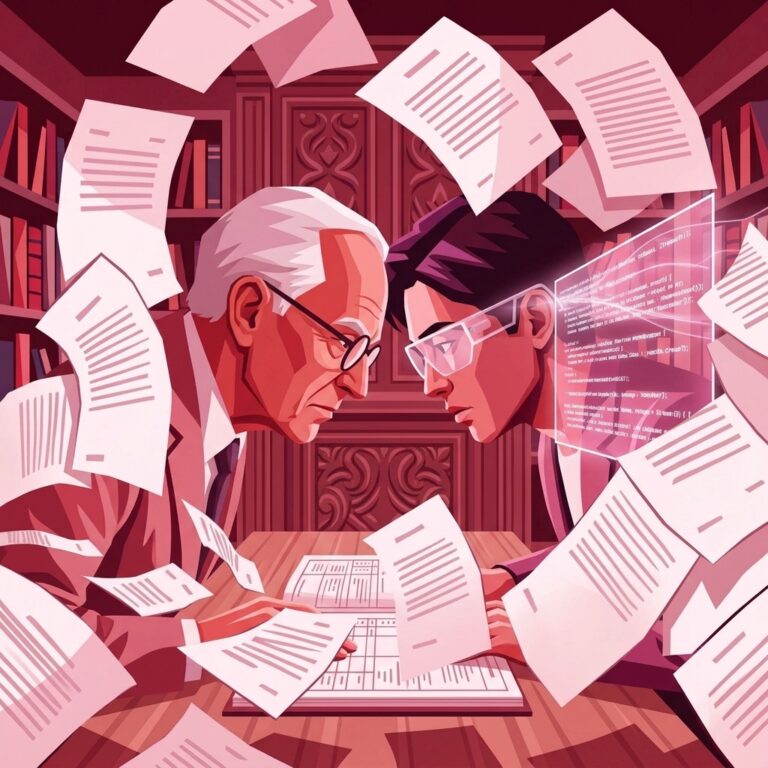
Smart glasses can already read a live transcript, generate an answer, and float it an inch above the wearer's own eyeline, invisible to anyone looking at their face. Nick McIntosh put it bluntly on LinkedIn: "smart glasses have quietly dissolved the one assessment format everyone thought was AI-proof" (McIntosh, 2026). The format institutions dug up specifically because it felt unhackable lasted, in practice, about as long as it took a wearables company to ship a product.
When Should Your Local AI Ask a Bigger One for Help?
A cookbook problem, and a rebuild I love physical books, cookbooks very much included: the stains on the pages that mark the recipes actually worth…
Explore the Knowledge Graph
See how every note connects — an interactive map of topics, tags and ideas across the whole garden.
Open the graph →